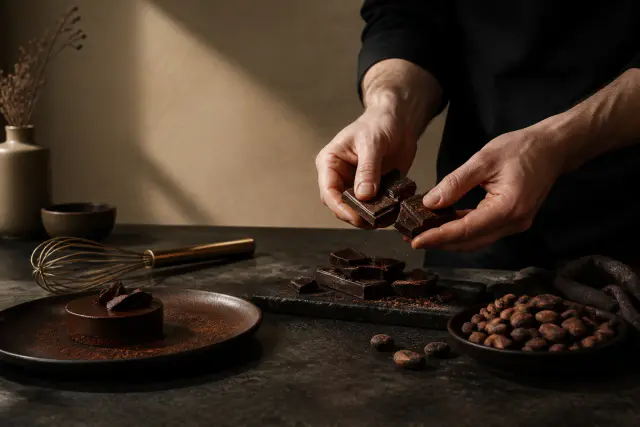
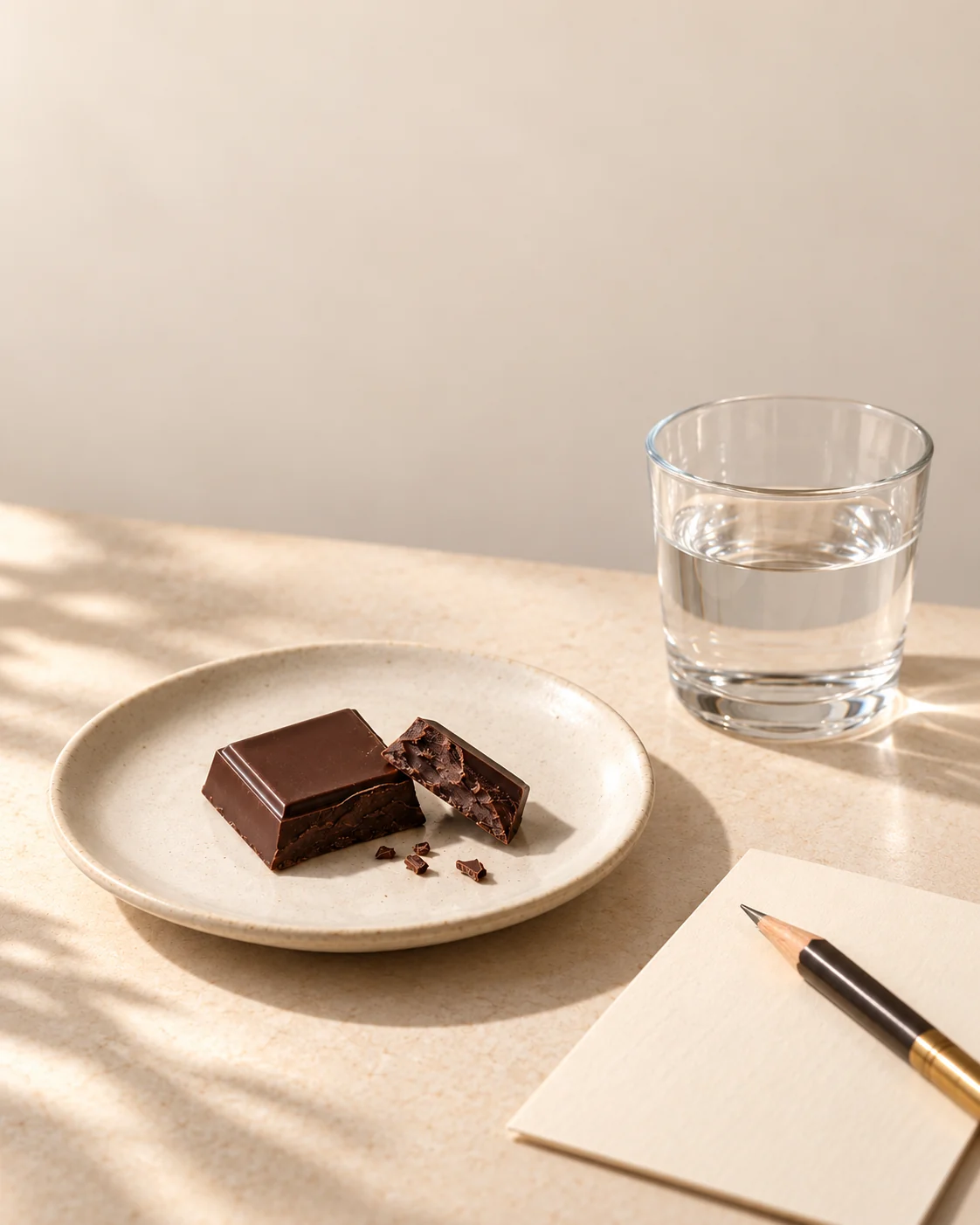
“I like it” is a perfectly complete answer when you are simply choosing what to enjoy. But if you want to describe more precisely what appeals to you, give the chocolate a little more time.
Appearance, aroma, the sound of a snap, texture and aftertaste are different parts of one experience. Observing them separately can make it easier to describe a flavour, even without complicated words.
Professional sensory evaluation uses structured methods, a shared vocabulary and controlled conditions. Cacao of Excellence describes standardised evaluation of cocoa and chocolate, including work with trained assessors. The steps below are an accessible exercise in personal observation, not a laboratory protocol, certificate or quality rating.
Before the first bite
Choose a calm place without strong aromas from coffee, perfume or food. Let the chocolate reach a comfortable room temperature for tasting; do not heat it directly. Keep water nearby to sip between samples.
If you are comparing two chocolates, taste them under similar conditions and use pieces of roughly the same size. You could ask someone else to label them with letters so the packaging or your expectations do not influence you. This is a simple way to observe more carefully, not a requirement.
Seven steps for tasting
1. Look at the surface. Notice the colour, sheen, evenness and visible texture. Describe what you see without drawing a conclusion about quality from colour or sheen alone. Appearance is a first observation, not a final verdict.
2. Break it and listen. If you are tasting a solid chocolate, break off a piece and notice the sound and the feel in your hand. Some tasters use the word snap for a crisp break. The sound alone does not prove quality: it can vary with the recipe, thickness, shape and temperature of the piece. This step may not apply to other formats.
3. Smell before tasting. First bring the whole piece close, then smell it again after breaking it. Pause briefly between the two. Which association comes first — cocoa, a roasted aroma, or a nutty, fruity or floral note? Write down your first impression; you do not need to find the perfect word straight away.
4. Taste slowly. Take a small piece and give it time to soften in your mouth. Notice the first sensations — sweetness, bitterness, acidity or astringency, if you detect them. Not every chocolate will show all of these, and there is no required order.
5. Follow the texture. Does the chocolate melt gradually or stay more substantial? Does it feel smooth, creamy, dry or slightly grainy? These describe the texture you perceive; they are not a reliable way to identify ingredients or production methods.
6. Notice how the flavour develops. Some impressions arrive immediately, others after a few seconds. Try separating the experience into a beginning, middle and finish. For example, you might write: “a roasted aroma first, followed by softer sweetness”. This is a personal note, not a statement about the ingredients.
7. Notice the aftertaste. After you swallow, what remains? Note whether the aroma fades quickly or lingers, and how you would describe the finish. If you are comparing two samples, sip water and take a short pause before the next one.
Finding words for flavour
Start with familiar, concise descriptions: cocoa, roasted, nutty, fruity, floral, caramel or herbal. Choose one or two words instead of searching for complicated tasting terminology.
The flavour wheel and shared vocabulary from Cacao of Excellence show how common descriptors help assessors describe different characteristics more consistently. In your own notes, these words are associations. A “nutty note” does not automatically mean that a product contains nuts; always check the label of the specific product for its ingredients.
Observation is not a rating
After tasting, separate two things: what you noticed and whether you liked it. “Full aroma, smooth melt, a slightly bitter finish” describes an impression; liking it is your personal preference.
Professional evaluation uses structured procedures and shared criteria so samples can be compared more consistently. At home, there is no single right answer. Try two samples and write down three words for each: first aroma, texture and aftertaste.
For trade partners: if you work with chocolate products and would like to discuss the current portfolio and trade information, visit our trade partner page.
Frequently asked questions
Do I need to detect a particular note? No. Descriptors are helpful words for your impression, not a test with one correct answer.
Does the sound when chocolate breaks show whether it is good quality? Not on its own. It also depends on the shape, thickness, recipe and temperature.
If I notice a fruity or nutty note, does that mean the product contains fruit or nuts? Not necessarily. A sensory association does not replace the ingredient list on the label.
There is no single right personal answer. Paying attention helps you describe more precisely what you notice.
Write down three things — aroma, texture and aftertaste — and keep observation separate from personal preference.