Before Laica became a recognisable name, there was a factory, an Italian town and Lino Saini’s decision to turn chocolate into an industrial undertaking. The story continues through a new production site, automation, a second generation and an identity that still carries Arona in its signature.
Before the name Laica
Company histories often begin with a familiar logo. Laica’s story begins earlier — with a different name.
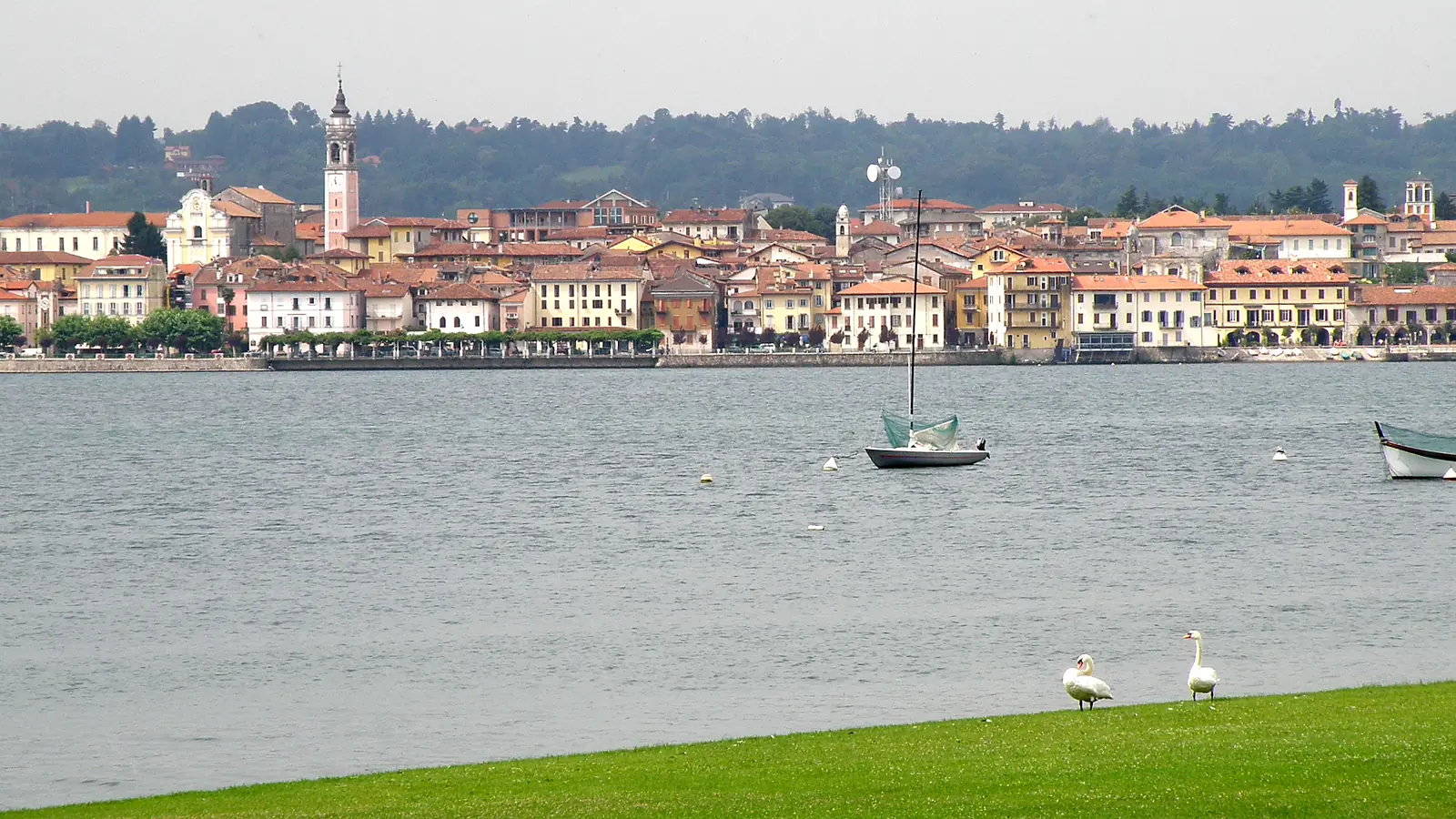
In 1946, Lino Saini opened a chocolate factory in Arona and named it Sant’Alberto in honour of his grandfather. The detail matters because it places the company’s beginning in both family memory and a particular place. Arona did not remain just an address in company records. Over time, the town became part of how Laica tells the story of its origins.
The first factory did not yet carry the name that would later become known beyond Italy. That name appeared two years later, when the company adopted the name Laica and became a joint-stock company. The word is neither a family name nor an abstract marketing idea. It is an abbreviation of an Italian phrase meaning industrial processing of chocolate and related products, linking chocolate with industrial production from the outset.
This moment points to the company’s direction. Its foundation was not a story of an artisanal workshop, but a factory created with the ambition to organise production on a larger scale.
When post-war Italy changed the scale
Laica’s official history connects the next major stage with Italy’s post-war economic boom. The Italian market was changing: consumption was no longer shaped only by the need for food, but increasingly included small, affordable pleasures and gestures for oneself and one’s family.
For Laica, this meant a need for more space and new machinery. The first site on Via 2 Giugno gradually became too small for a growing company. The answer was a move to a larger production building on Via Vittorio Veneto — an address that remains associated with Laica today.
The new site opened in May 1963. According to the company’s Ethical Code, Italy’s Minister for Foreign Trade attended the ceremony, along with local and regional officials. Their presence shows that the factory had come to matter not only to its founder, but also to the economic life of Arona.
The building made room for new production lines, warehouses and offices. Laica also introduced a fully automatic moulding line, the Cav. Emil. 600 made by Milan-based Carle & Montanari. Behind the technical name was a significant transition: from growing local production to a factory where automation became part of the future operating model.
Chocolate figures as part of the factory’s memory
A chocolate company’s history is made of more than buildings and machinery. It also lives in the products through which consumers recognise the brand.
In its own timeline, Laica gives space to chocolate coins, rabbit figures and Father Christmas figures. It presents them as early product symbols of the factory. A particular place belongs to the so-called Bande Monete: strips of chocolate coins that first found an audience at early Autogrill motorway stops and later reached other markets.
Product development moved alongside advances in machinery. The company identifies the design of an automatic counting machine for coins and other products packed in characteristic mesh bags as a distinct technological step. It is a telling detail in Laica’s industrial history: automation was not only about producing more units, but also about solving specific challenges in moulding, counting and packaging.
The second generation joins the company
Decades after the beginning, management gradually passed to the Saini family’s second generation.
Andrea Saini was the first to join the company, although the official timeline does not give a precise year. Lucia Saini joined him in 1999, followed by Fabio Saini the next year. Andrea, Lucia and Fabio are the second generation of the family at Laica.
In its current presentation, the company connects the three with different areas of its work. Andrea has a leading management role, Lucia is linked to production organisation, and Fabio to engineering and technological innovation. Continuity is therefore described as more than the passing on of a family name. It is shared across management, production and technology — three areas on which a modern chocolate factory depends.
During this period, Laica continued to invest in automation, new lines and an expanded warehouse base. The story no longer turned on one major leap like the 1963 move, but on a series of production decisions.
When origin became part of the identity
In 2019, Laica introduced a new corporate identity, expressed in an English rendering of its signature: “Love for chocolate. 1946 Arona, Italy.”
Each part of the signature has a purpose. “1946” points back to Lino Saini’s beginning. “Arona” places the town beside the company’s name. “Italy” states the national origin, while “love for chocolate” brings the story together in a short message.
The new identity took a prominent place when Laica presented itself at the 2019 ISM trade fair. The company explained the change as a way to underline the heritage passed from Lino Saini to his children, its connection with the local area and the Italian character of its products.
This was more than a logo change. After decades of expansion and automation, Laica chose to put its origins in the most visible place: in the brand’s own signature.
A story of continuity, not a past left unchanged
The line from Sant’Alberto to Laica today is not simply a sequence of anniversaries. It shows how a factory can change without erasing its beginning.
The grandfather’s name remains in the first chapter. Arona remains in the address and the corporate identity. The machine introduced in 1963 marks the point when growth took an industrial form. The second generation took on different parts of management and production. In 2019, the company turned that continuity into a public signature.
Laica’s history is therefore more than the story of a company founded in 1946. It is a story of how a sense of origin can remain visible even as the factory, its technology and its market change.
Laica’s story does not begin with the familiar logo. It begins with the Sant’Alberto factory, a family memory and Lino Saini’s decision to make chocolate an industrial undertaking.
From Sant’Alberto to the signature “1946 Arona, Italy”, Laica’s story is one of a factory that changed its scale and technology while keeping its origins in view.